|
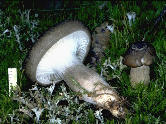
HYGROPHORUS CAMAROPHYLLUS |
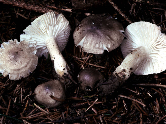 |
HYGROPHORUS PUSTULATUS |
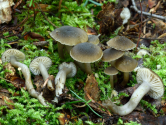 |
HYGROPHORUS ATRO-OLIVACEUS |
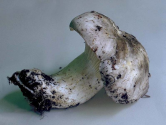 |
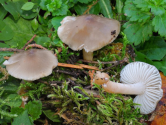
Espèce typique par son apparition en fin d'hiver ou au début du printemps, en montagne sous les sapins. Chapeau d'abord blanc, puis gris ou noir : HYGROPHORUS MARZUOLUS |
 |
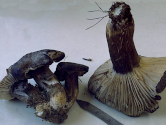
La cuticule non visqueuse a tendance à développer, avec le temps, une forte odeur de terre : HYGROPHORUS FORNICATUS = CUPHOPHYLLUS FORNICATUS |
 |
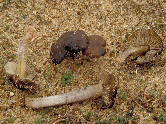
Chapeau campanulé mamelonné, bistré fuligineux, rayé radialement: HYGROPHORUS ATRAMENTOSUS = CAPRINUS ss Bresadola |
 |
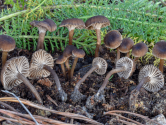
Chapeau conico-convexe, d'abord gris verdâtre, puis noir: HYGROPHORUS OLIVACEONIGER = HYGROCYBE OLIVACEONIGRA |
 |
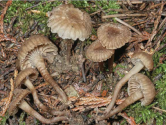
Chapeau 0,5-3,00 cm, brun grisâtre puis brun-noir à maturité ou en séchant: HYGROPHORUS FOETENS = HODOPHILYUS FOETENS |
 |
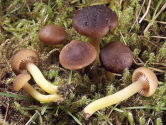
Chapeau jusqu'à 20 mm, très hygrophane, brun châtaigne à brun grisâtre: HODOPHILYUS HYMENOCYSTIS |
 |
Chapeau 0,5-2,00 cm, brun-grisâtre à beige ochracé: HYGROPHORUS MICACEUS = HODOPHILYUS MICACEUS |
 |
Espèce venant au prinemps: HODOPHILYUS PRAECOX |